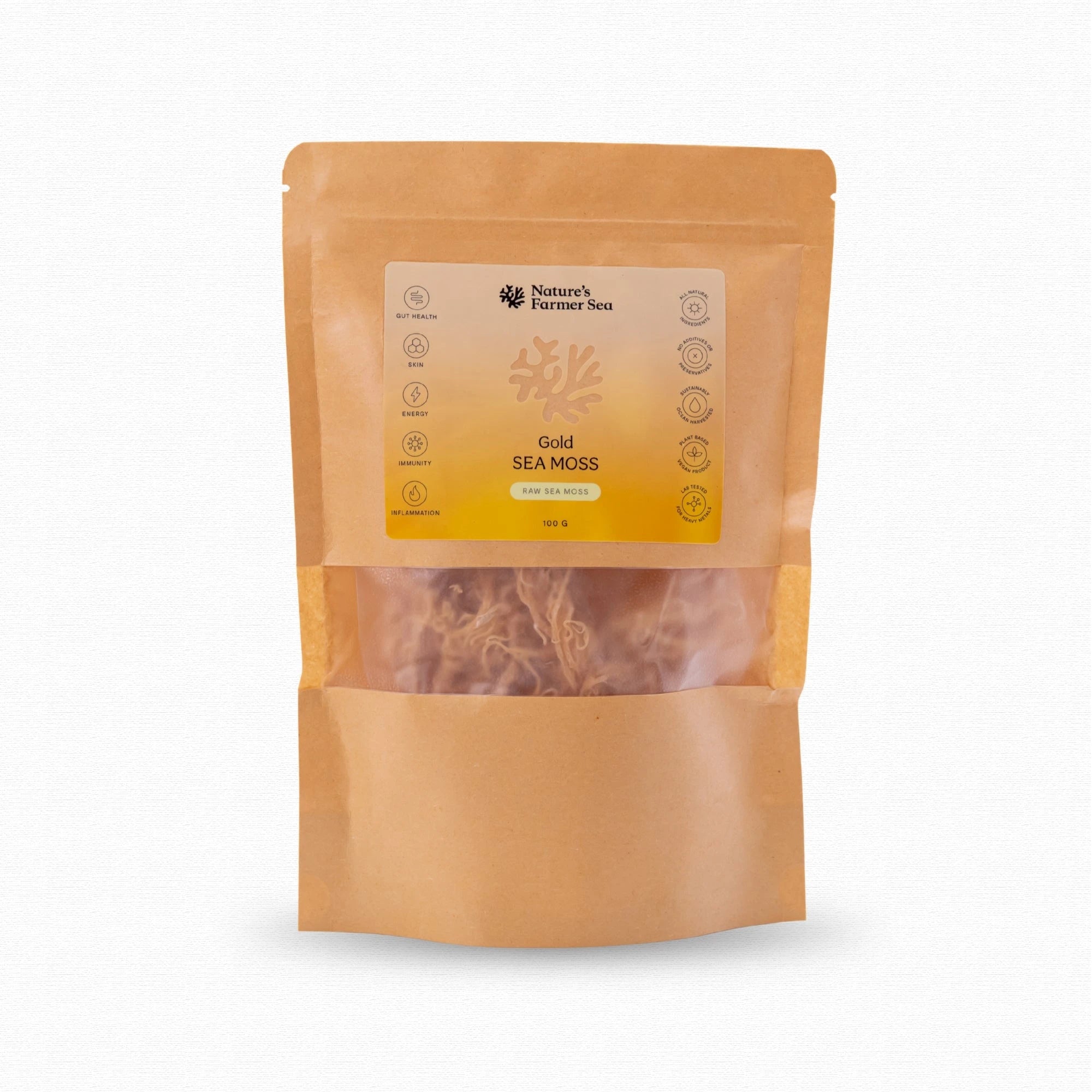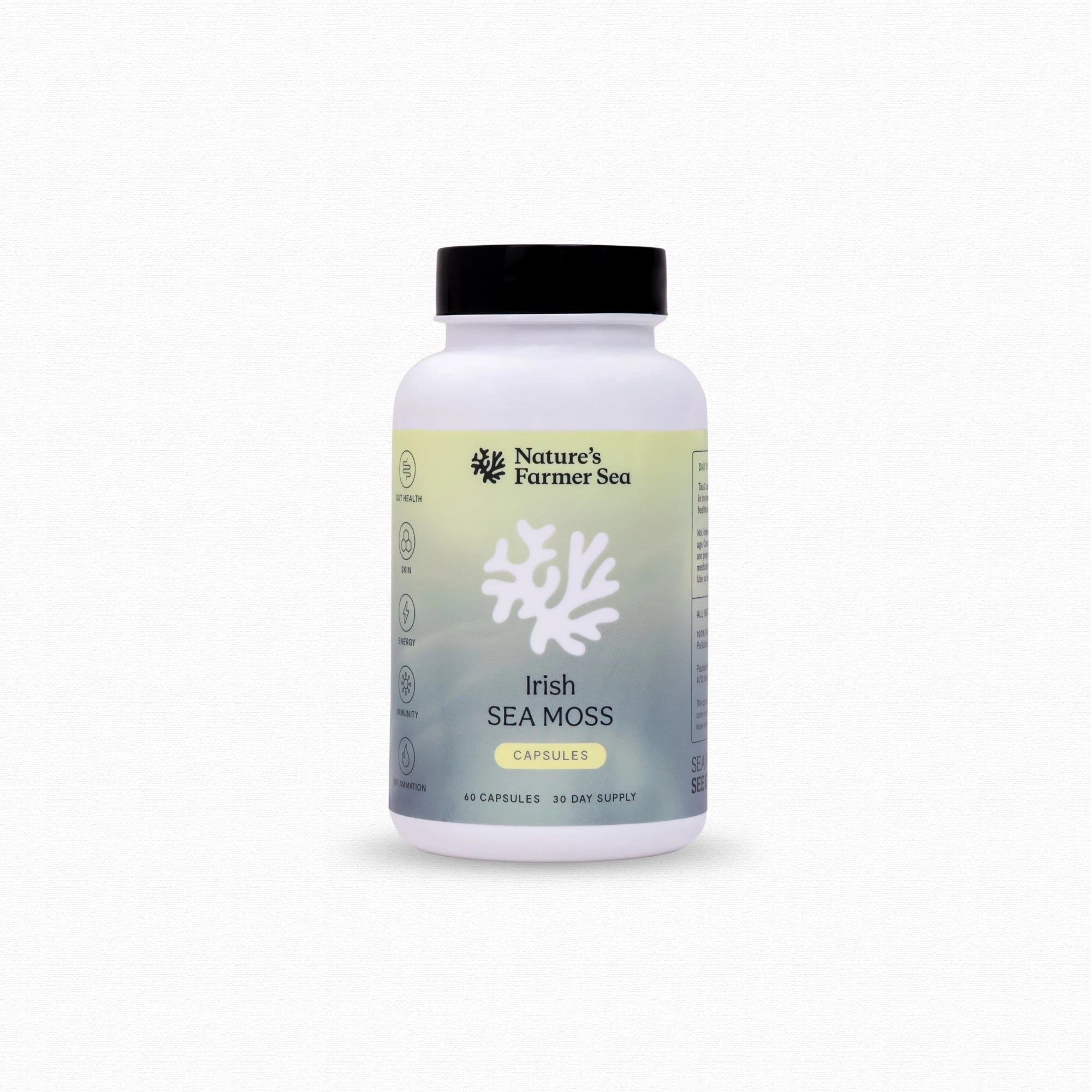


By choosing sea moss, you're joining a movement for climate action, community empowerment, and sustainable food.
By Lillian Jessop
How Sea Moss Contributes to a Healthier Planet
And why your daily scoop matters more than you think.
You want to make a positive impact on the planet — but you’re not ready to live off-grid or give up everything you love. That’s okay. At Nature’s Farmer Sea, we believe in making sustainability effortless.
With just one scoop of organic sea moss gel a day, you can:
-
Nourish your body naturally
-
Support cleaner oceans
-
Contribute to a healthier, more sustainable future
This isn’t just about personal health — it’s about joining a global movement. By choosing organic sea moss, you’re helping drive change for our environment, marine ecosystems, and local communities.
1. Sea Moss (and Seaweed) Fights Climate Change — One Breath at a Time*
When you choose sea moss, you’re supporting sustainable farms that act like oceanic forests. Through photosynthesis, red seaweeds like Kappaphycus alvarezii capture atmospheric CO₂, helping to:
-
Lower greenhouse gas levels and reduce ocean acidity (Maulana & Rosariawari, 2024)
-
Lock carbon into seaweed tissues, where it’s naturally stored long-term
-
Remove carbon from the short-term carbon cycle — an average of 1.87 tons CO₂ equivalent per hectare per year (Duarte et al., 2023)
-
Replace high-emission products with seaweed-based alternatives, lowering environmental impact (Kim, 2024)
Over time, mature seaweed farms become powerful blue carbon ecosystems, storing even more carbon and protecting marine life.
By choosing organic sea moss gel or capsules, you’re directly contributing to climate action while nourishing your health. It’s a small daily ritual with a big planetary impact.
Sea moss is nature’s carbon sponge—and you're part of that solution.
2. Sea Moss: An Ocean Cleanser in Disguise
How this marine superfood helps restore balance to our ecosystems
Polluted oceans are dying oceans. Nutrient runoff from agriculture — especially nitrogen and phosphorus — causes harmful algal blooms that suffocate marine life and trigger ecosystem collapse.
Sea moss and other red seaweeds act like natural ocean filters, absorbing these excess nutrients and restoring balance to coastal ecosystems (Azad et al., 2017; Devi & Gowri, 2007).
How Sea Moss Cleans the Ocean
-
Nutrient biofiltration — absorbs excess nitrogen and phosphorus from the water
-
Prevents harmful algal blooms — protecting fish, corals, and marine biodiversity
-
Improves water clarity and quality — healthier ecosystems mean stronger ocean resilience
For example, Gracilaria verrucosa can remove up to 100% of nitrogen and phosphorus compounds, dramatically improving water quality (Devi & Gowri, 2007).
Every time you choose organic sea moss gel or capsules, you’re supporting farms that help clean and restore our oceans — turning your wellness ritual into a force for environmental change.
3. Turning Cow Burps into Climate Wins
Seaweed-supplemented feed could revolutionise agriculture.
The agriculture industry is one of the largest contributors to greenhouse gas emissions, driven mainly by methane (CH₄) from livestock. Methane is 25x more potent than carbon dioxide in trapping heat in the atmosphere.
Here’s where seaweed innovation comes in. Studies show that adding Asparagopsis taxiformis — a red seaweed — to cattle feed can reduce methane emissions by up to 80% (Indugu et al., 2024).
How Seaweed Cuts Methane Emissions
-
Blocks methane-producing microbes in the cow’s gut
-
Shifts fermentation pathways, reducing hydrogen waste (Liu et al., 2024)
-
Improves milk quality and animal health — real-world trials show added benefits (Bošnjaković et al., 2024; Méo-Filho et al., 2024)
By choosing sustainably sourced sea moss, you’re helping fund seaweed research and support solutions that can transform agriculture, lower emissions, and fight climate change.
4. Sea Moss Farming Lifts Communities and Livelihoods
Empowering coastal families and creating sustainable futures.
Sea moss farming is transforming lives in low-income, coastal regions across the Philippines, Tanzania, the Caribbean, and beyond. As traditional fishing industries face growing uncertainty, sea moss cultivation provides:
-
Stable incomes — helping families achieve greater financial security
-
Food security — supporting better nutrition and resilience against climate change
-
Sustainable livelihoods — farming methods are low-impact and eco-friendly (Zamroni & Yamao, 2014)
Women at the Heart of Sea Moss Farming
With low barriers to entry and minimal technological needs, sea moss cultivation is accessible to many — especially women, who often play a leading role in farming and processing. Their involvement brings wider social benefits:
-
Increased household income
-
Greater participation in community decision-making
-
Improved education and opportunities for children (Lestari & Yuwana, 2023; Hamilton, 2016)
When you choose Nature’s Farmer Sea sea moss gels and capsules, you’re supporting your own health while also investing in the wellbeing of coastal communities around the world.
5. Sea Moss (and Seaweed) Feed the Future
Why this ocean-grown superfood could help solve global food security.
With the global population heading toward 10 billion by 2050, we urgently need nutrient-dense food solutions that don’t damage the planet. Sea moss offers exactly that:
-
Grows in saltwater — no need for freshwater or arable farmland
-
Nutrient powerhouse — rich in amino acids, vitamins, minerals, and dietary fibre (Leandro et al., 2020; Mahadevan, 2015)
-
Low environmental impact — naturally supports marine ecosystems instead of depleting them
-
Scalable and sustainable — seaweed can be cultivated across 20.8 million km² of ocean without competing with terrestrial crops (Liu et al., 2023)
As the world searches for climate-friendly food solutions, seaweed-based nutrition is emerging as a key player. Sea moss isn’t just good for you — it’s good for the planet and a hungry, warming world.
6. Sea Moss Makes Soil — and Food — Healthier
Transforming agriculture with natural biofertilisers
Sea moss isn’t just good for your body — it’s revolutionising how we grow food. When used as a biofertiliser, seaweed-based products help farmers create more sustainable, resilient food systems:
-
Improves soil health — enriches soils with essential minerals and organic matter
-
Boosts crop yields — supports better growth while reducing reliance on synthetic fertilisers (Lakshani et al., 2024)
-
Builds plant resilience — seaweed sprays and soil amendments strengthen crops against stress, pests, and climate extremes (Hassan et al., 2021; Bodapati et al., 2022)
The result? A circular, regenerative farming system that supports both the planet and the people who depend on it.
When you choose organic sea moss gels or capsules, you’re not just nourishing yourself — you’re also investing in the future of sustainable agriculture.
Final Thoughts: Small Habit, Global Impact
One scoop a day, countless positive ripples.
Choosing sea moss isn’t just a wellness decision — it’s an act of quiet environmental leadership. Every time you stir a spoonful of Nature’s Farmer Sea gel into your smoothie, you’re contributing to something bigger than yourself:
-
Restoring ocean ecosystems through sustainable farming
-
Supporting biodiversity and protecting marine life
-
Empowering coastal communities with better livelihoods
-
Feeding the world more sustainably with low-impact, nutrient-dense foods
-
Reducing agricultural emissions by supporting innovative methane-reducing research
Your daily sea moss ritual helps capture carbon, clean polluted waters, restore marine habitats, and build resilient food systems — all without having to change your entire lifestyle.
It’s simple, powerful, and impactful. Choose Nature’s Farmer Sea — because doing good can be effortless, and it can start with one small habit: a scoop of sea moss.
*Note: Sea moss is a common consumer term that typically refers to red seaweeds such as Kappaphycus alvarezii and Gracilaria spp. While this blog often uses “sea moss”, many of the benefits discussed apply to seaweed more broadly—including brown and green macroalgae used in agriculture, climate mitigation, and biofertiliser applications.
FAQs: Sea Moss and Sustainability
1. How does sea moss help fight climate change?
Sea moss farms act like underwater forests. Through photosynthesis, they capture carbon dioxide (CO₂), reduce ocean acidity, and store carbon long-term — making them a natural blue carbon solution (Duarte et al., 2023).
2. Can sea moss really clean the ocean?
Yes. Sea moss and other red seaweeds absorb excess nitrogen and phosphorus from polluted waters, helping to prevent harmful algal blooms and restore marine balance (Devi & Gowri, 2007).
3. How does sea moss support sustainable farming on land?
When used as a biofertiliser, seaweed enriches soils, improves crop yields, and reduces reliance on chemical fertilisers — creating a more circular, regenerative farming system (Lakshani et al., 2024).
4. What role does sea moss play in food security?
With the world’s population heading toward 10 billion, sea moss is a nutrient-dense, scalable food that grows without farmland or freshwater, making it a sustainable food source for the future (Liu et al., 2023).
5. How does sea moss farming benefit communities?
Sea moss farming provides stable incomes and food security in coastal regions, particularly empowering women farmers who gain financial independence and social leadership roles (Hamilton, 2016).
6. Is sea moss good for both people and the planet?
Absolutely. Sea moss nourishes the body with essential nutrients while also supporting climate action, ocean health, and community livelihoods — making it a rare win-win for humans and the Earth.
References
Azad, A. K., Estim, A., Mustafa, S., & Sumbing, M. V. (2017). Assessment of Nutrients in Seaweed Tank from Land Based Integrated Multitrophic Aquaculture Module. Global Environmental Perspectives, 1(1), 1-10.
Bošnjaković, A., et al. (2024). Potential to reduce methane production using cultivated seaweeds. Environmental Research, 246, 118-126.
Bodapati, P., et al. (2022). Growth enhancement of agricultural crops using seaweed liquid fertilizer. Plant Science Today, 9(3), 1439-1445.
Devi, C. B., & Gowri, S. (2007). Biological treatment of aquaculture discharge waters by seaweeds. International Journal of Control Pollution, 23(1), 45-50.
Duarte, C. M., et al. (2023). Carbon burial in sediments below seaweed farms. bioRxiv. https://doi.org/10.1101/2023.01.02.522332
Ginigaddara, G. A. S., et al. (2018). Farmer's Perspective on Importance and Constraints of Seaweed Farming in Sri Lanka. Current Investigations in Agriculture and Current Research, 3(1), 286-290.
Hamilton, S. (2016). Seaweed aquaculture through the lens of gender: Participation, roles, and empowerment. Marine Policy, 74, 294-303.
Hassan, A., et al. (2021). Impact of Seaweed Liquid Extract Biostimulant on Growth, Yield, and Chemical Composition of Cucumber (Cucumis sativus). Agriculture, 11(4), 320. https://doi.org/10.3390/agriculture11040320
Indugu, N., et al. (2024). Understanding how a red seaweed reduces methane emissions from cows. Phys.org.
Kim, J. (2024). Seaweed: A bioindustrial game-changer for the green revolution. Biomass and Bioenergy, 158, 106-115.
Lakshani, H., et al. (2024). Role of Seaweed as a Biofertilizer. Bentham Books. https://doi.org/10.2174/9789815223644124010017
Leandro, A., et al. (2020). Seaweed’s Bioactive Candidate Compounds to Food Industry and Global Food Security. Life, 10(8), 140. https://doi.org/10.3390/life10080140
Lestari, R. P., & Yuwana, R. (2023). Seaweed aquaculture through the lens of gender: Participation, roles, and empowerment. Marine Policy, 74, 294-303.
Liu, J., et al. (2023). Scenario analyses of mariculture expansion in the context of climate change. Ocean & Coastal Management, 203, 105-112.
Liu, H., et al. (2024). Red seaweed supplementation suppresses methanogenesis in the rumen. bioRxiv. https://doi.org/10.1101/2024.06.07.597961
Maulana, F., & Rosariawari, R. (2024). Harnessing seaweed farming for climate mitigation in South Korea: evaluating carbon dioxide removal potential and future research directions. Algae, 39(1), 1-10.
Mahadevan, R. (2015). The role of seaweed in food security. Marine Policy, 61, 1-5.
Méo-Filho, A., et al. (2024). Understanding how a red seaweed reduces methane emissions from cows. Phys.org.
Nasir, M. H., et al. (n.d.). Seaweed as bioadsorbent for nitrogen and phosphorus removal. Journal of Environmental Science and Sustainable Development, 6(1), 13.
Neveux, N., et al. (2018). Seaweed: A bioindustrial game-changer for the green revolution. Biomass and Bioenergy, 158, 106-115.
Pap, S., et al. (2024). Patent Landscape Analysis of Seaweed-Based Biofertilizers. Journal of Marine Science and Engineering, 10(1), 9. https://doi.org/10.3390/jmse10010009
Parab, A. V., & Shankhadarwar, P. (2022). Role of Seaweed as a Biofertilizer. Bentham Books. https://doi.org/10.2174/9789815223644124010017
Ransom, E., et al. (2016). Seaweed aquaculture through the lens of gender: Participation, roles, and empowerment. Marine Policy, 74, 294-303.
Zamroni, A., & Yamao, M. (2014). Seaweed farming as a sustainable livelihood option for northern coastal communities in Sri Lanka. Journal on Food, Agriculture and Society, 6(1), 22-30.